
Feel free to browse the talks or you can view an index into the talks here. The index will route you to the specific talk you are interested in.
Navajo Code Talkers – Herb Goodluck, N7HG
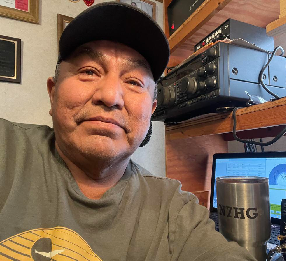
About N7HG:
Herb is the QSL Manager for Navajo Code Talkers Special Event Station N7C and resides in Lukachukai, Navajo Nation, Arizona. He is the son of a Navajo Code Talker.
He spends his time sharing his late father stories and the legacy of the Navajo Code Talkers in the South Pacific theater during WWII conflict.
Abstract:
Herb will talk about the past indigenous people’s background, and the sacrifices the “Navajo Code Talkers” made, plus a bit of how the code was developed. He will explain how the code was used, how the code was a code within a code, and explain how the letters of the alphabet are used from Navajo to English. He will use stories from his late father to illustrate throughout the presentation.
Forum: The “Cubical Quad Antenna” – Jim Koshmider, K8OZ

About K8OZ:
Jim began learning about cubical quad antennas in 1957 and has developed considerable experience in design, building, and applied use of these antennas. He has confirmed contact with all current DXCC entities except North Korea and Scarborough Reef, and is a member of the DXCC Honor Roll.
Abstract:
The main purpose of this forum is to present information to the participants about the characteristics of the Quad antenna, in contrast with other types of antennas. This will be a presentation about the history, design, evolution, and possible applications of “Quad” antennas – followed by an open discussion or Q & A.
Mysterious Shortwave Numbers Stations – Mike Langner, K5MGR
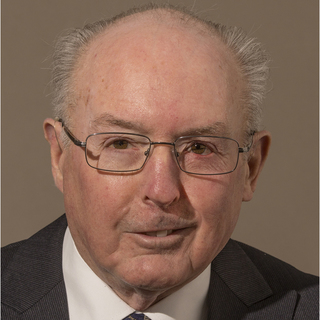
About K5MGR:
Mike is a retired broadcast station owner and lifetime career broadcast engineer. He holds the Amateur Extra, Commercial Radiotelegraph, and Commercial Radiotelephone licenses.
Currently he is the New Mexico inspector for the New Mexico Broadcasters Associations’ Alternative Broadcast Inspection Program, a program jointly sponsored by the FCC and the National Association of State Broadcast Associations in which when stations pass and compliance inspection by inspectors , stations are given a three-year exemption from random, luck-of-the-draw FCC walk-in inspections. This program helps keep our broadcast industry as voluntarily compliant as possible.
He is the Chair of the New Mexico Emergency Broadcast System. He has been an active ham since 1957!
Abstract:
Mysterious voices repeating numbers in the night. Secret coded instructions for spies 24 hours a day. Coded instructions for international crime syndicates. Messages for a master spy who infiltrated the CIA. Coded cyphers that brought down an airliner full of passengers. They’re at your fingertips on your shortwave receiver. Learn who’s behind these mysterious transmissions, past and present, along with recordings of these clandestine signals in war and peacetime. Photos of formerly secret sites, voices of the past and present, and names and photos of their most notorious users illustrate this engaging presentation about Spies On The Radio: Secret Numbers Stations.
A Review of the Mathematics behind the Process of IQ Modulation – Larry Goga, AE5CZ

About AE5CZ:
Lawrence (Larry) Goga has been interested in electronics and sound recording since he was a young boy. His work in professional audio led to a career in the motion picture industry in Los Angeles. Larry worked as a Production Sound Mixer with various movie and television crews and worked his way up to the position of Chief Engineer for Skywalker Sound South, a George Lucas company. In 1999, after 25 years in the movie business, Larry moved to New Mexico where he began a new career as a freelance electronics consultant.
Larry was licensed as an Amateur Radio operator in February, 2007 and in June of that year he upgraded to the Extra class level. In 2008 he became a certified Amateur Radio Instructor and a Volunteer Examiner under the direction of W5YI. He is also certified as an amateur radio instructor by the ARRL. Larry is currently the Lead Instructor for the Frank Warren Instructor Group.
Larry is now retired and he continues to teach electronics to aspiring amateur radio operators. He also continues to enjoy experimenting with electronic circuit design, RF Test and Measurement, modern computer programming techniques and learning about all the latest technological advances in amateur radio. Larry was the past President of the Duke City Hamfest Planning Committee for 2024.
Abstract:
This presentation will begin with a brief review of the basic elements of high school mathematics including Algebra and Trigonometry. The equation that defines the mathematical process of Radio Transmission and Reception will then be presented and explained. Techniques used to solve this equation will then be discussed with a particular emphasis on the use of In-phase and Quadrature (I and Q) signals. The presentation will conclude with some practical examples of IQ signal creation and their practical applications to the modern world of Analog and Digital Communications.
The Design of the Fong Antenna – Dr. Edison Fong, WB6IQN

About WB6IQN:
Fong was first licensed in 1968 as WN6IQN. He later upgraded to Extra Class (with full 20 WPM CW) with his present call of WB6IQN. He obtained the BSEE and MSEE degrees from the Univ. of California at Berkeley and his Ph.D. from the Univ. of San Francisco. A Life Senior Member of the IEEE, he has 13 patents and over 50 published papers and books in the area of communications and integrated circuit design. Presently, he is employed by the University of California (previously at Berkeley and presently at Santa Cruz- Silicon Valley) as an instructor teaching graduate classes in RF design, antenna design and High-Speed interface design. During his 40-year career he has performed worked for Motorola, National Semiconductor, Phillips Semiconductor and Advanced Micro Devices. One of Dr. Fong’s publications: https://www.w6ek.org/files/docs/Antennas/VHF-UHF-Antennas/Ed-Fong-2017.pdf. (Note: this publication is available at the www.ARRL.org.)
Abstract:
Designer and multiple patent holder for Fong Antenna, Dr. Fong will present his antenna designs.
The K3LR Contesting Station – Tim Duffy, CEO DX Engineering, K3LR

About K3LR:
Tim is the Chief Executive Officer of DX Engineering. Licensed in 1972, he is very active on the HF bands. K3LR enjoys hosting multi multi DX radio contest events. Tim likes to help bring new people into the hobby by mentoring them in the fun of amateur radio. Tim is president of his local ham club, the Mercer County Amateur Radio Club. He is active in RACES, ACS and ARES. Tim is a member of the CQ Contest Hall of Fame and was on Team USA for the World Radio Team Championship (WRTC) five times. Tim is the founder and chairman of Contest University (CTU). He is chairman of the World Wide Radio Operators Foundation (WWROF). Tim is a graduate of the Pennsylvania State University.
Tim is the recipient of the 2015 Amateur of the Year Award presented by the Dayton Hamvention® Awards Committee and the 2016 YASME Excellence Award. During Hamvention® 2024, Tim was inducted into the CQ Amateur Radio Hall of Fame because of his lifetime achievements that far transcend his contesting accomplishments.
Abstract:
Tim will speak about his K3LR station. It is one of the number one Multi/Multi contest DX stations on the planet. Tim engineered and built the entire station and its massive 11 acre antenna farm of 13 towers, including its Yagi’s, directional arrays, and switching systems that give it capabilities that are seldom seen in the amateur world.
Rocky Mountain Ham Radio (RMHAM) Overview – Brian Mileshosky, N5ZGT
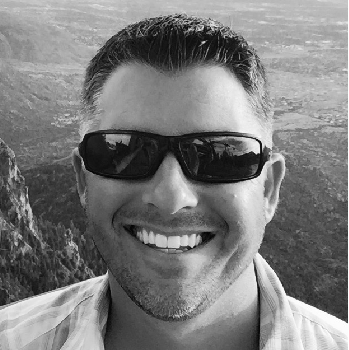
About N5ZGT:
Brian Mileshosky, N5ZGT, of Albuquerque, New Mexico, is president of Rocky Mountain Ham Radio (New Mexico). He became an amateur radio operator 31 years ago, which led to his curiosity about electronics and RF, then his BS and MS degrees in electrical engineering with emphasis on RF/microwave engineering, followed by his career path in research and development of RF/microwave and other capabilities.
He is a life member of ARRL, served the ARRL as a board member and officer (Vice Director, Director, Vice President) for 13 years, organized the annual New Mexico QSO Party, and serves on the Grants Advisory Committee of Amateur Radio Digital Communications (ARDC) which awarded $6.7M in financial grants to amateur radio, educational, R&D, and scholarship focused organizations across the world in 2023.
Abstract:
RMHAM members and leadership will provide an overview of Rocky Mountain Ham Radio, its mission, its ongoing projects (New Mexico TechFest, RMHAM University, expansion and operation of its 5-GHz microwave network and DMR network, technical assistance and partnerships with other amateur radio clubs, and more), and how you can get involved from wherever you live in New Mexico or Colorado!
Rocky Mountain Ham Radio (RMHAM) 5-GHz Microwave Network Overview – Brian Mileshosky, N5ZGT
About N5ZGT:
Brian Mileshosky N5ZGT, of Albuquerque, New Mexico, is president of Rocky Mountain Ham Radio (New Mexico). He became an amateur radio operator 31 years ago, which led to his curiosity about electronics and RF, then his BS and MS degrees in electrical engineering with emphasis on RF/microwave engineering, followed by his career path in research and development of RF/microwave and other capabilities.
He is a life member of ARRL, served the ARRL as a board member and officer (Vice Director, Director, Vice President) for 13 years, organized the annual New Mexico QSO Party, and serves on the Grants Advisory Committee of Amateur Radio Digital Communications (ARDC) which awarded $6.7M in financial grants to amateur radio, educational, R&D, and scholarship focused organizations across the world in 2023.
Abstract:
RMHAM members and leadership will provide an overview of Rocky Mountain Ham Radio’s 5-GHz microwave backbone/network which spans Albuquerque, New Mexico all the way up to Cheyenne, Wyoming and across Colorado’s western slope (with plans to expand it further). RMHAM’s network is a fully-managed infrastructure that enables partnering amateur radio organizations to facilitate or expand their capabilities (repeater operations, linking, and any IP-based application that is Part 97 compliant) for the benefit of the broader amateur radio community. Come learn about this network, the capabilities that it currently enables, how you can get involved in its planned expansion, and some of the tools and methods used in its upkeep (DevDB, Observium, RADIUS, Smokeping, Telegram, OSPF, and more).
Kit Building Techniques For Success – Joe Eisenburg, K0NEB

About K0NEB:
My career was mostly in the IT industry as a field service engineer. I was first licensed in 1969, and am a life member and Diamond Club member of the ARRL as well as a Life member of the Dayton Amateur Radio Association. I am a member of the Lincoln Amateur Radio Club as well as the Aksarben ARC. I was a co-founder of the Mid-America Coordination Council and have served my local clubs in many ways. I was presented the YASME Foundation’s Award of Excellence in 2020. In 2020, I also received Nebraska’s highest civilian honor from the Governor for producing over 350 clear face shields using my 3D printer for local first responders during the beginning of the pandemic.
Abstract:
I’ll show lots of hints and ideas to give the kit builder the best chance for success. I’ll go over tools and things necessary to make this happen and give some very low cost options. I’ll also show some examples of kits good for all levels of building skills.
Where Have All the YL’s Gone? – Patti Donahue, KE7IR

About KE7IR:
Patti has been a ham since 1976. She became a ham prior to marriage, and was highly encouraged by her then boyfriend, Tom Donahue, to be licensed.
Marriage, Children, and Career kept her very busy from 1979 through about 2009. Tom and Patti have 3 sons, all are Amateur Radio Operators. All 3 sons are married and have children. They have 11 grandchildren and 1 great grandson.
Upon retiring from Motorola, Patti and Tom did a fair amount of traveling, including spending summers at their cottage in Ontario, Canada. Winter fun consists of camping trips to the sand dunes near Yuma, Arizona.
Tom became a Silent Key in February 2022. At that time, Patti became much more active in Amateur Radio.
Patti obtained her Extra Class license in December 2023.
Recently, Patti decided to improve her CW skill, and is currently studying daily. She has completed the CW Academy Intermediate Course and hopes to enroll in their Advanced Class in January.
Ham Radio has transformed a TOO Quiet Widow’s house into a much livelier home for Patti.
Abstract:
The aim of this presentation is to increase awareness and collect ideas for increasing the number of active lady hams. This presentation will start with a few statistics related to Lady Hams. Followed by some details about one of the first female amateur radio operators and her acceptance among her male peers. Then, a suggestion for activating more lady hams based upon the life experience of KE7IR and N9ASN. And, finally a group discussion to collect other ideas for encouraging more female amateur radio operators. I look forward to meeting new ham friends and hearing their good ideas on this subject.
Ham Radio Messaging Made Easy – John Mocho & Ed Poccia, KC5QOC & KC2LM
About KC5QOC:
John is a retired Agricultural Engineer, Honeywell Staff Engineer and Royal Healthcare Data Center Manager. John holds an Extra Class License and is currently President of the Caravan Amateur Radio Club and is active in Bernalillo County ARES. John’s favorite amateur radio recreational modes are FT8, FT4, SSTV, and Winlink Emergency modes.
About KC2LM:
Ed is a retired teacher with experience at the Elementary, Middle School, Undergraduate and Graduate levels. While working at the middle school level, he had a ham station in his classroom operating HF SSB Voice and VHF Packet modes bringing ham radio into the curriculum. He has been a Ham Radio operator since 1961, currently holding an Extra Class License. His favorite recreational modes include; CW contesting, keyboard to keyboard modes and SSTV. He developed the New Mexico Packet Pals group last year in order to provide additional training and experience using Packet Radio for emergency communication.
Abstract:
Ham Radio operators are communicators getting the message through when all else fails. But, are you ready to perform that function? John and Ed have found new software that makes it rather EZ to do.
They will present some of these systems and give you an opportunity to try them. With the development of new software by the National Traffic System sending an ARRL RADIOGRAM has never been easier. The software for sending SSTV images, perfectly, has been reduced to a simple Drag and Drop procedure. A group from Arizona hams have set up a procedure for sending SMS messages to cell phones replacing the older SMS system that was taken down. Become a communicator at the Duke City Hamfest.
How I Use My Zachtek WSPR QRPp WSPR Transmitter – David Casler, KE0OG
About KE0OG:
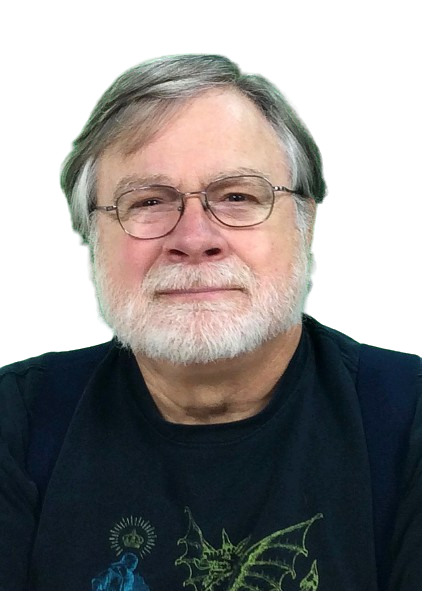
Dave Casler, KEØOG, has a Masters Degree in Engineering from California State University at Northridge. After his stint in the US Air Force, he worked at several companies that do business with the federal government, finally retiring from IBM. Dave writes the “Ask Dave” column in QST, has developed a full set of up-to-date training videos that parallel the ARRL License Manuals– which are hosted by the ARRL–and has his own YouTube channel of the same name (youtube.com/davecasler) that posts nearly daily. You can send your ham radio questions to casler28@gmail.com. Dave has been a ham for over 50 years. He and his wife Loretta, KBØVWW, live near Ridgway, Colorado.
Abstract:
I’m currently putting a presentation together about how I use my Zachtek WSPR QRPp WSPR transmitter, along with my 80-10 EFHW antenna, to see which bands are open and when. I intend to throw in a few slides about how WSPR works.
Winlink Email Setup – Basic Setup to Messaging – Al Massaro & Randy Buxton, KF5SMH & W4IFI

About KF5SMH:
Al Massaro, callsign KF5SMH, is a General Class amateur radio operator licensed since 2012. He focuses on digital modes including Winlink and FLDIGI, with a primary emphasis on EMCOMM and community resilience in northwest New Mexico as Coordinator of the NWNM EMCOMM GROUP.
About W4IFI:
Randy Buxton, W4IFI, is a Amateur Extra operator first licensed in 1999. A retired air traffic controller, he is a member of the NWNM EMCOMM Group, La Plata County (Colorado) Search & Rescue Communications Team, and the La Plata County EOC Communications Team. Randy’s radio activities are centered around backcountry emergency communications using Winlink and VHF radio systems.
Abstract:
In this presentation they will show how to obtain, install and configure the Winlink applications. Winlink Global Radio Email is a network of amateur radio and authorized government stations that provide worldwide radio email using radio pathways where the internet is not present. It supports email with attachments, position reporting, weather and information bulletins, and is well-known for its role in interoperable emergency and disaster relief communications. It is capable of operating completely without the internet–automatically–using smart-network radio relays. Licensed Winlink operators/stations use both amateur radio and government radio frequencies worldwide.
Winklink VARA and FORMS Usage – Al Massaro & Randy Buxton, KF5SMH & W4IFI
About KF5SMH:
Al Massaro, callsign KF5SMH, is a General Class amateur radio operator licensed since 2012. He focuses on digital modes including Winlink and FLDIGI, with a primary emphasis on EMCOMM and community resilience in northwest New Mexico as Coordinator of the NWNM EMCOMM GROUP.
About W4IFI:
Randy Buxton, W4IFI, is a Amateur Extra operator first licensed in 1999. A retired air traffic controller, he is a member of the NWNM EMCOMM Group, La Plata County (Colorado) Search & Rescue Communications Team, and the La Plata County EOC Communications Team. Randy’s radio activities are centered around backcountry emergency communications using Winlink and VHF radio systems.
Abstract:
This presentation builds on the previous one, going into detail of the various modes and forms available withing the Winlink suite of applications. It will show how to obtain high speed modes with baud rates exceeding 20,000 bps over radio including the simplest HT.
Winlink Global Radio Email is a network of amateur radio and authorized government stations that provide worldwide radio email using radio pathways where the internet is not present. It supports email with attachments, position reporting, weather and information bulletins, and is well-known for its role in interoperable emergency and disaster relief communications. It is capable of operating completely without the internet–automatically–using smart-network radio relays. Licensed Winlink operators/stations use both amateur radio and government radio frequencies worldwide.
POTA in Emergency Situations – Erik Larson & Reed Merrick, AD7OV & AF7FW

About AD7OV:
Erik Larson, AD7OV, began his amateur radio journey in 1990, earning his Novice class license just before his 15th birthday. For 34 years, he’s been an active presence on HF, utilizing voice, digital modes, and occasional CW contacts. In 2006, he upgraded to Extra and began sharing his passion by teaching technician courses in his local community.
Erik has served previously as Vice President of the Bridgerland Amateur Radio Club in Cache Valley, Utah, and President of the Basin Amateur Radio Club in Vernal, Utah. Today, he is actively involved as the Uintah County Emergency Coordinator for ARES, and continues to teach annual licensing courses, fostering new hams in his community.
His current amateur radio interests include frequent Parks on The Air (POTA) activations and exploring digital modes on HF, 6, and 2 meters. He holds WAS and DXCC awards on multiple HF bands, and VUCC on 6m for his FT8 operations, along with numerous POTA accolades for extensive activations over the past two years.

About AF7FW:
Reed Merrick, AF7FW, discovered his passion for amateur radio in April 1999, quickly advancing to Extra Class by December of the same year. A past president of the Basin Amateur Radio Club, Reed has spent over 15 years immersed in HF operations. His true enjoyment lies in portable radio, especially through the POTA (Parks On The Air) program, where he boasts an impressive record of over 250 activations in the last year. Reed is known for his skill with and preference for vertical whip antennas, having done extensive experimentation with them during his many portable operations.
Abstract:
Erik Larson (AD7OV) and Reed Merrick (AF7FW) will present a fun look into using POTA activations as ways to improve operating skills for emergency preparedness. They will share with you their experience operating POTA and how much it has prepared them for emergency activation and operation. Erik is the ARRL ARES Emergency Coordinator for Uintah County, Utah, and sees POTA as a valuable tool to help train hams to set up and operate in an emergency situation as well as a great way to revitalize HAM radio. Reed recently timed himself on a POTA station deployment, and 9 minutes 47 seconds from when he arrived at the park, he was on the air calling CQ for his first contact with a fully operational HF station capable of operation from 40m thru 6m at 100W output, with solar/battery power.
Valencia Middle School’s Successful Amateur Radio Program – William Kennedy, KJ5AEV

About KJ5AEV:
I teach 7th grade science and technical engineering of robotics and HAM radio for 7th and 8th grade students at Valencia Middle School in Los Lunas, NM. This is my 7th year as a teacher for the Los Lunas School district. I move back to Los Lunas with my family at the beginning of the 2019-2020 school year to care for my in-laws. While getting my four children (ranging from 14 to 21) in the Los Lunas school district, I reconnected with friends who worked in the district who talked me into taking a job as a teacher. For my undergrad degree, I attended NMSU, where I received a Bachelor of Science in Mechanical Engineering Technology. I received a Masters of Secondary Education and a TESOL endorsement from ENMU. I worked in the construction testing field until my first child’s birth, when I left to become a stay-at-home parent. For five years, I raised my children until 2011, when I opened my own business. Kennedy Casting, a service company that had me working on everything from basic mechanics on cars and trucks to custom fabrication work on medium to heavy equipment for the oil field.
Abstract:
In 2023-2024 Los Lunas School District’s Valencia Middle School (VMS) installed nice amateur radio station and started an after-school/lunch period ham radio activity. So much student interest was generated by being able to get-on-the-air under the enthusiastic leadership of science teacher William Kennedy (KJ5AEV), the program grew to a full year elective amateur radio/robotics class in 2024-2025 – the students wanting to take the class exceeded the 30 that could be accommodated. Most of the 15 students who earned amateur radio licenses are now ‘active’ hams and are regularly heard using their HTs on VMS’s and area repeaters as well as checking into nets. Half of the students went on to earn their General tickets and half of those advanced to be Extras. Improvements (in some cases dramatic) in the students’ interest/performance in school were not only noted by Mr. Kennedy, but were also mentioned by other teachers and the principal.
Forum: Welcome to Amateur Radio – How to Have a Grand Time on the Air and Not Feel Overwhelmed – Mary Ann Cornett & John Dodd, NS7X & KJ5KUF

About NS7X:
MaryAnn was first licensed in January, 1978 and earned her Amateur Extra license about 1980. Her first love is CW, and her passion is CW traffic handling. She was appointed as the first ARRL Section Traffic Manager and is an A-1 Operator.
About KJ5KUF:
John Dodd, KJ5KUF, is a new HAM and a member of ARRL and the High Desert Amateur Radio Club (HDARC). He holds an FCC General license, and is very keen to both learn the amateur radio hobby and encourage new participants. Once a DoD contractor and an enlisted member of the US Navy, he has lived in the Albuquerque area for over 30 years and feels a strong dedication to our State and community. John has an extensive background in aircraft operational testing and enjoyed a successful career in the development of military defense systems. His interest in electronics and STEM is what drew him to amateur radio. John desires to work with hobby enthusiast to “Pay it Forward” for the next generation of amateur operators, to assist with youth outreach.
John Dodd, KJ5KUF, and MaryAnn Cornett, NS7X, will be presenting this forum. It is their hope that they encourage new/prospective hams, and provide them an opportunity to make new ham friends and perhaps find an Elmer or two. This forum will be an open discussion in which participants may ask questions (What radio should I get?), express concerns (How do I get over “mic fright”?), and get some positive feedback about being a ham (You’re not alone because we’ve all been there.).
The Art of Mentoring – Bill Mader, K8TE
About K8TE:
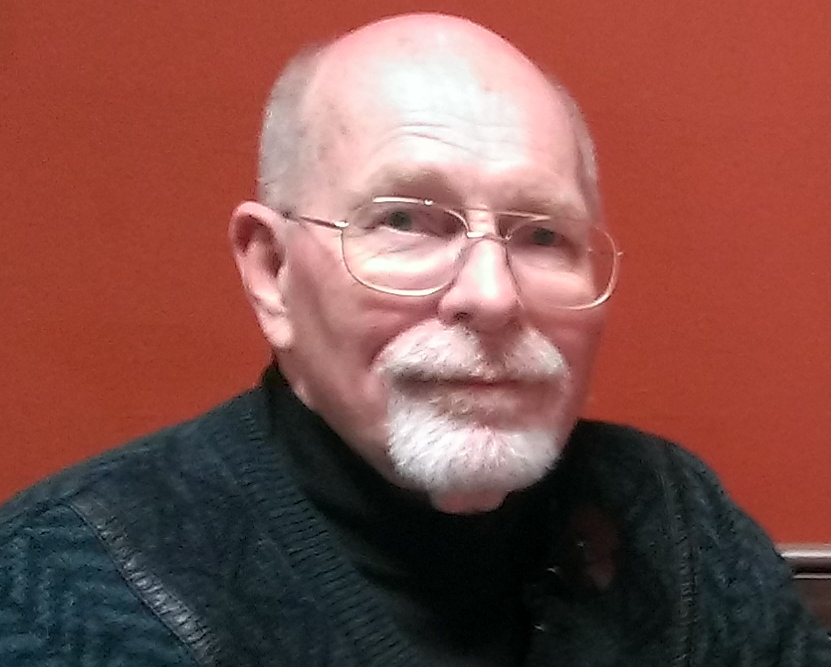
ARRL New Mexico Section Manager
First licensed in 1960 as WV2RBF, Bill started chasing DX when he became DX in 1974 as KZ5WA. He found Radio Sport (contesting) a terrific way to work DX from the Canal Zone, and later Canon AFB NM, especially on 10 meters during Cycle 22. He now chases DXpeditions vigorously since Cycle 25 has provided such good propagation. In 2025 he activated the last two counties he needed to apply for the Worked All (3,077) USA Counties award.
Bill has been the ARRL New Mexico Section Manager since 2016. A member and officer of the Albuquerque DX Association, he helps motivate members to get on the air, regardless of their antennas and equipment. His log shows 303 DXCC entities worked has contacted over 100 countries in a weekend with just dipoles and a vertical and even worked DX running 5 Watts to a mobile antenna!
A prolific writer and presenter on many topics related to Amateur Radio, Bill is an enthusiastic representative of our great avocation, both in New Mexico and across the Southwest U.S. His primary focus is to train and educate all current and prospective hams in the art of Amateur Radio, to become better hams, and have even more fun doing what they love to do.
Abstract:
In the How’s DX? Column of March 1971 QST, Rod Newkirk, W9BRD, introduced the term “Elmer” as someone who provides personal guidance and assistance to would be hams. While we still use the same term, mentoring better defines the role of those who help others better enjoy our great avocation.
Bill delves into the current “Elmer Crisis” and what we can do to improve helping others who lack experience with and knowledge of the many facets of being an Amateur Radio operator. Bill asserts local clubs are the key solving this crisis and describes what actions to take for improving mentoring. Better mentors make better hams and help grow clubs with engaged hams, regardless of how long they have been licensed.
HF Measuring Tape Antenna – This Makes An Excellent POTA Antenna – James Boswell, KA5SIW

About KA5SIW:
I am retired from the VLA near Socorro New Mexico. My career in electronics has spanned over 41 years. Companies I have worked for: Schlumberger, Verizon, Boeing, Los Alamos Nat. Lab, and National Radio Astronomy Observatory (VLA). Bad thing about working in electronics, it sure ruins a good hobby. When I am not on the radio or working you can find me fishing or camping.
Abstract:
During the 90 minute time frame James will introduction the material and the demonstrate the antenna. Any extra time we can do a question-and-answer format and have the youngest amateur present assemble one of the antennas (I will bring all the parts and tools needed).
Practical Applications of the nanoVNA with Hands-on and Real-time Demonstrations – Larry Goga, AE5CZ
About AE5CZ:
Lawrence (Larry) Goga has been interested in electronics and sound recording since he was a young boy. His work in professional audio led to a career in the motion picture industry in Los Angeles. Larry worked as a Production Sound Mixer with various movie and television crews and worked his way up to the position of Chief Engineer for Skywalker Sound South, a George Lucas company. In 1999, after 25 years in the movie business, Larry moved to New Mexico where he began a new career as a freelance electronics consultant.
Larry was licensed as an Amateur Radio operator in February, 2007 and in June of that year he upgraded to the Extra class level. In 2008 he became a certified Amateur Radio Instructor and a Volunteer Examiner under the direction of W5YI. He is also certified as an amateur radio instructor by the ARRL. Larry is currently the Lead Instructor for the Frank Warren Instructor Group.
Larry is now retired and he continues to teach electronics to aspiring amateur radio operators. He also continues to enjoy experimenting with electronic circuit design, RF Test and Measurement, modern computer programming techniques and learning about all the latest technological advances in amateur radio. Larry was the past President of the Duke City Hamfest Planning Committee for 2024.
Abstract:
This presentation will consist of a series of real-time demonstrations of various aspects of using, calibrating and interpreting the information presented to and received from a typical “nanoVNA” Vector Network Analyzer. For this particular demo the nanoVNA of choice will be the DeepVNA 101 as available from the Deepelec Store at AliExpress.com.
The main display of this VNA will be video projected onto a large screen using a USB webcam. In this manner everyone will be able to see the device, the procedures and the results while listening to a real-time discussion of what’s being done and why.
The presentation will start with a POWER ON walk-through and introduction to all the features of a typical nanoVNA. Certain specific differences between the many versions of the available devices will be discussed. After this intro there will be demonstrations of the Calibration routines and discussions of why they are important. Then, depending upon the available time, the following uses will be shown and discussed: (1) Antenna and feedline analysis, (2) the analysis of filter networks, (3) the difference between Spectrum Analyzers and VNAs, (4) determining the characteristic impedance of an unknown piece of coaxial cable, (5) Time Domain Reflectometry (TDR) and its uses to examine and measure coaxial cable, (6) the creation and use of Touchstone files and (7) the use of 3rd Party Software programs.
Making Your Club Succeed – Bill Mader, K8TE
About K8TE:
ARRL New Mexico Section Manager
First licensed in 1960 as WV2RBF, Bill started chasing DX when he became DX in 1974 as KZ5WA. He found Radio Sport (contesting) a terrific way to work DX from the Canal Zone, and later Canon AFB NM, especially on 10 meters during Cycle 22. He now chases DXpeditions vigorously since Cycle 25 has provided such good propagation. In 2025 he activated the last two counties he needed to apply for the Worked All (3,077) USA Counties award.
Bill has been the ARRL New Mexico Section Manager since 2016. A member and officer of the Albuquerque DX Association, he helps motivate members to get on the air, regardless of their antennas and equipment. His log shows 303 DXCC entities worked has contacted over 100 countries in a weekend with just dipoles and a vertical and even worked DX running 5 Watts to a mobile antenna!
A prolific writer and presenter on many topics related to Amateur Radio, Bill is an enthusiastic representative of our great avocation, both in New Mexico and across the Southwest U.S. His primary focus is to train and educate all current and prospective hams in the art of Amateur Radio, to become better hams, and have even more fun doing what they love to do.
Abstract:
Many ham radio clubs are either stagnant or dying and with them so is the local ham community! Too few hams are engaged in Amateur Radio and all it has to offer. Too many new hams get no further than a Technician Class license with their HT batteries uncharged in a drawer, forgotten, unused, and no HF rig or antenna in sight.
Bill asserts our local clubs are the key to turning around this apathy and inactivity. He provides the data that prove this assertion and the ways to make both sclubs and their members successful. He points out the solution begins with welcoming members and visitors, new or old, at meetings that provide excellent presentations of interest to the membership. Using first-rate monthly newsletters, developing engaging activities, and setting club goals can make the club worth joining, rather than something to avoid.
An Open Forum on Various Wire Antennas, the Pros and Cons – Gil Gray, N2GG
About N2GG:
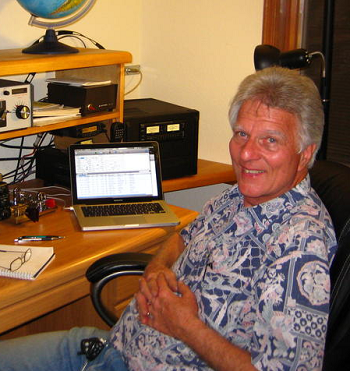
Gil grew up in southern California with an active interest in science, electronics and ham radio. He was first licensed in 1958. In 1961 he began working for Pacific Telephone & Telegraph Company, while still a student at South Gate High School, near Los Angeles.
After graduating from college, Gil spent most of his career in telecommunications engineering. At the end of 1987 he retired as a Senior Engineer from Bell Communications Research (formerly Bell Labs). He then began exploring spirituality and metaphysics. This led him to a new career as owner of a wholesale business providing products for conscious living to stores throughout the United States.
In the early ’90s Gil discovered New Mexico. In 2000, he and his wife, Danna Loori, K2JOY, moved to a small farm in Belen, NM. They are now, mostly, retired enjoying Ham Radio, Travel and Square Dancing. Gil’s other interests include: RV travel, playing five-string banjo and guitar, and creating a more autonomous lifestyle. To this end, a 7.4 KW solar power plant is now functioning at their home.
Gil holds an Extra-class ham-radio license, is a Life Member of the American Radio Relay League, is a registered instructor with the ARRL, enjoys “rag chewing” and chases DX on CW & SSB. A pet love is antennas, particularly wire antennas of all kinds.
Abstract:
This presentation will look at the advantages and disadvantages of various wire antenna types. There will be a discussion and recommendations on antennas for Limited Space and HOA’s. An open discussion on your particular antenna questions will be answered.
Radio Orienteering – Jerry Boyd, WB8WFK

About WB8WFK:
Jerry Boyd, WB8WFK, has been an active pioneer in the development of Radio Direction Finding (RDF) equipment and techniques. He has experience in Direction Finding (DF) ranging from VLF all the way to the 5 GHz microwave bands. Jerry has represented the United States by attending 3 Amateur Radio Directing finding (ARDF) championships, as a member of the very elite USA ARDF team. He has designed custom RDF receivers and directional antennas for both ARDF competitions, the life-and-death searches for locating downed aircraft using Emergency Location Transmitter (ELT). RDF gear is also used to locate man-made and natural interference to any government, commercial, or amateur radio service. To help others sharpen their skills, Jerry has designed ARDF transmitters, using FPGA based Software Defined Radio (SDR) designs, to simple Continuous Wave (CW), Morse Code, transmitters. Jerry currently holds an Extra Class license and has worked professionally in the electronics / Aerospace industry for over 41 years in Analog design, RF design and has three patents. Jerry is also the ARRL CO ARDF coordinator.
Abstract:
Radio Orienteering, also known as Amateur Radio Direction Finding (ARDF), is an on-foot action sport where participants use radio direction finding techniques, along with a map and compass, to locate hidden transmitters. The sport includes various age categories for both men and women and does not require a ham radio license for competitors (competitors are only receiving). Sanctioned events in the US are governed by the ARRL ARDF committee, with rules posted on the ARRL website The sport has evolved to include collaboration with orienteering clubs, providing detailed maps and land use permits, and has seen a name change from ARDF to Radio Orienteering to attract more participants. The presentation covers the differences between Radio Orienteering and traditional orienteering, the types of events held at national and world championships, the frequency bands used, and the equipment involved. It also highlights the history of Radio Orienteering in New Mexico and the role of local clubs in promoting the sport.
2025 Update: National Traffic System, New Mexico – Tom Russell, N5ATR

About N5ATR:
Tom Russell, N5ATR, has been active with club and ARES activities in and around our state. Tom currently serves as an Emergency Coordinator for Bernalillo County ARES. Additionally, Tom is the webmaster for the NM Section website, arrl-nm.org, and serves as the Net Manager for the NM Section HF Emcom net. Tom Retired from the U.S. Marine Corps Reserve in 2010 with a variety of assignments including field artillery, ground reconnaissance, recruiting, and command and control systems. Tom’s second career was as a commercial airline pilot where he also served as the Safety Chairman for the Airline Pilots Association, Mesa Airlines. Tom is married to Kathleen, KG5DOG, and is a resident of Edgewood, New Mexico. They enjoy hiking, camping, and spending time with their two dogs, Jane Air, and Lexi.
Abstract:
This presentation will review how the NTS system functions within the state of New Mexico. Topics to be covered will include a system overview, key players that help our system function, NTS-Voice and Digital systems, and BPQ-32 applications. This presentation will paint the picture of where we stand today and discuss future growth and optimization.
Introduction to D-Star – Robert Langoria, N5JH
About N5JH:
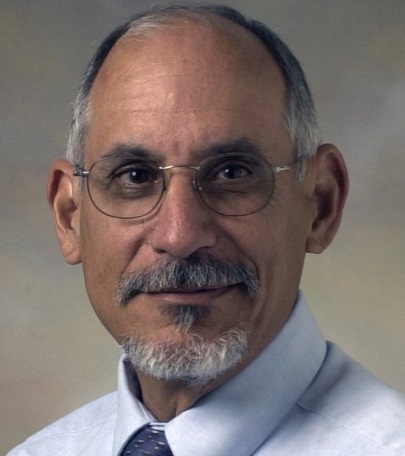
Bob Longoria, N5JH, has been an amateur radio operator since 1972. He has actively participated in various aspects of amateur radio, primarily operating on HF SSB and CW bands. Licensed in California, his original call sign after advancing from Novice was WA6TPL. Currently, he serves as the Station Trustee of N5VA, the radio station located at the VA medical center in Albuquerque. Additionally, he holds the position of Net Manager for the SCAT Net, which operates on VHF and UHF bands from Monday through Saturday mornings in Albuquerque. Furthermore, he manages a DSTAR Simplex net on Wednesday evenings. In addition, Bob coordinates radio communications for the Albuquerque Run for the Zoo and the Tour of the Rio Grande bike ride. He also serves as the Vice President for the Duke City Hamfest.
Abstract:
Join us for an engaging one-hour session that demystifies D-STAR (Digital Smart Technologies for Amateur Radio), the digital voice and data protocol developed specifically for amateur radio operators. This presentation will provide a comprehensive overview of the D-STAR system, covering its architecture, capabilities, and practical applications in both local and global communication.
We’ll explore key components such as digital voice transmission, call routing, repeater linking, and the use of reflectors. Participants will also learn about D-STAR-compatible radios, hotspot configurations, and how to get started with registration and setup. Whether you’re new to digital modes or looking to expand your operating skills, this presentation offers the foundational knowledge needed to begin using D-STAR effectively.
By the end of the session, attendees will have a clear understanding of how D-STAR fits into the evolving landscape of amateur radio and how they can leverage its features for reliable, high-quality communication across the globe.
High Altitude Nuclear Electromagnetic Burst – Dave Casler, KE0OG
About KE0OG:
Dave Casler, KEØOG, a ham for more than 49 years, has degrees in mathematics and electrical engineering. After he left the USAF, he worked in aerospace at Northrop, Lockheed Martin, and IBM. He is the author of the “Ask Dave” column each month in QST. He has a YouTube channel of the same name with over 1100 videos. Dave’s training videos for Tech, General, and Amateur Extra have been adopted by ARRL as their training videos which match the ARRL license manuals
Abstract:
Covers history, the nature of the pulses (E1, E2, and E3), and the actual level of danger to hams. While it should be considered, it is not as untannable as folklore would have it.
Forum: YL – A Ham in Her Own Right – Mary Ann Cornett, NS7X

About NS7X:
MaryAnn was born in New Mexico, as were her aunts and uncles and cousins by the dozens. It’s a family thing. She moved to Iowa as a young bride, and she lost all connection with her family other than snail mail and long-distance phone calls (which were limited to Sunday nights after eleven pm because that was when the long-distance charges were cheaper).
When her sister-in-law became a ham (Marilyn Goodrich, KB5DA an Albuquerque denizen), she encouraged MaryAnn to get her license so the two of them could make a sked; It was a great idea because it gave Marilyn a good reason to get on the air, and MaryAnn would have a lifeline to “back home.” MaryAnn got her novice ticket in January, 1978. Unfortunately, MaryAnn became enamored with CW, and Marilyn was a phone op through and through.
Within a year or two, MaryAnn upgraded to Amateur Extra, and was very active in the National Traffic System. She was named an A-1 Operator, was a liaison between the Central Area Net and the Tenth Region Net, and was appointed as the first Section Traffic Manager of Iowa. Oh, and she also had a lot of fun.
Eventually, MaryAnn got to return to the Land of Enchantment. Alas and alack, Marilyn had become a silent key. Even though Marilyn and MaryAnn took different paths in ham radio, they each had a grand time learning, exploring, and exciting a few electrons through the years. It is indeed ironic that in spite of their best intentions, they never once were able to contact each other.
Abstract:
This forum will be an informal discussion of the history and traditions of YL’s in amateur radio, issues/concerns and strengths/opportunities for today’s YL, and an assessment of what legacy the modern YL will leave to our daughters and granddaughters.
FlightAware – Update and rural area challenges, operation, and lessons learned setting up a system – Kevin Parmenter, KG5Q

About KG5Q:
Kevin has over 40 years of experience in the electronics and semiconductor industry. his expertise includes technology, applications engineering, product definition, as well as design engineering for the power electronics, medical electronics and military electronics fields. He has a BSEE from Purdue University and a BS in Business Administration from Colorado Technical University. Kevin is an IEEE Senior member, holds a First Class FCC (now GROL) license as well as an Amateur Extra Class license call sign KG5Q. Kevin is also an ARRL and Laurel VE. He has been involved in amateur radio since 1972 and has a patent in the power electronics field. He is involved in public safety and mission critical communications for Law Enforcement, EMS and Fire including recording for telecommunications, data communications and 911 systems as well as dispatch console systems. He was an early adopter and beta site for ATT FirstNet and Starlink.
Abstract:
Much has changed in the world of ADSB, FlightAware (now a part of Collins RTX) and tracking fixed wing aircraft and helicopters. This session will outline what is ADSB and what is it used for. Regulatory requirements and an actual accident incident example will be reviewed. We will cover how to participate in setting up a system to track all manner of aircraft and participate in this exciting field wherever you are located. We will cover how it works, the challenges presented in setting up a station using Pi as a Pi aware. Maximizing the reception distance via new gear will be covered as well as how to provide connectivity and power in challenging rural environments where those are not always a given. A live demonstration will be shown. Attendees will be able to confidently set up a tracking station anywhere on earth. Amateurs are uniquely positioned to be successful participating in this fun public service and educational opportunity.
How Ham Radio Started The Broadcast Industry – Mike Langner, K5MGR
About K5MGR:
Mike is a retired broadcast station owner and lifetime career broadcast engineer. He holds the Amateur Extra, Commercial Radiotelegraph, and Commercial Radiotelephone licenses.
Currently he is the New Mexico inspector for the New Mexico Broadcasters Associations’ Alternative Broadcast Inspection Program, a program jointly sponsored by the FCC and the National Association of State Broadcast Associations in which when stations pass and compliance inspection by inspectors , stations are given a three-year exemption from random, luck-of-the-draw FCC walk-in inspections. This program helps keep our broadcast industry as voluntarily compliant as possible.
He is the Chair of the New Mexico Emergency Broadcast System. He has been an active ham since 1957!
Abstract:
Before there were commercial radio stations, consumer radios and lots of radio listeners, there were radio amateurs building modest amateur radio stations that would become the giants of broadcasting we know today. We’ll look at the pioneering amateurs whose work grew through the years to be today’s media networks and flagship stations, and we’ll learn the identities of many of the amateur radio operators who became some of our most popular and beloved entertainers. The intertwined pathways that split into Amateur Radio and commercial broadcasting are fascinating tales of technical discovery, personal bravado, genius, and insight. Join us for the story of how a mighty industry was launched in the basements and attics where early amateur radio stations held sway.
“Top Band Express” 160m Vertical Antenna – David Jorgensen, WD5COV

About WD5COV:
David Jorgensen WD5COV was first licensed in 1977 while living in Alamogordo, NM. Ten years later Dave upgraded to extra class. Since his early days as a novice working his first DXCC, Dave has always been an avid DXer. He currently holds DXCC #1 honor roll, 10 band DXCC, and has a score in the DXCC Challenge of 3131. In 2011 Dave joined his first DXpedition team to Rotuma Island, 3D2R. Now a veteran DXpeditioneer including four top ten most wanted activations, Dave continues to give back to amateur radio by activating rare and semi rare entities to give others a chance to work them all. Now living in Deming, New Mexico, Dave has built his dream station on his 160 acre ranch. His antenna farm includes full size 1/4 wave four squares on both 80 and 160 meters built from rohn 25G. Two 155ft rotating towers hold stacked yagis for 12-40 meters. Several other towers hold additional arrays for six meters and other bands.
Abstract:
My presentation will be about the “Top Band Express” vertical antenna. After being on many DXpeditions, and seeing the struggles to erect the 160 antenna requiring half the team and many hours work, I designed the “Top Band Express”. The result is a 67 feet high vertical which one man can easily erect in about two hours’ time. The presentation will go into detail about the construction techniques, antenna design, and testing. Also details of the falling derrick system I designed to raise and lower the will be discussed. Why is the vertical 67 feet high? This question and added benefits of the antenna design will come to light. In addition, I have printed material to be handed out for those interested in the antenna.
Winlink Hands-on Workshop (all morning) – Al Massaro & Randy Buxton, KF5SMH & W4IFI
About KF5SMH:
Al Massaro, callsign KF5SMH, is a General Class amateur radio operator licensed since 2012. He focuses on digital modes including Winlink and FLDIGI, with a primary emphasis on EMCOMM and community resilience in northwest New Mexico as Coordinator of the NWNM EMCOMM GROUP.
About W4IFI:
Randy Buxton, W4IFI, is a Amateur Extra operator first licensed in 1999. A retired air traffic controller, he is a member of the NWNM EMCOMM Group, La Plata County (Colorado) Search & Rescue Communications Team, and the La Plata County EOC Communications Team. Randy’s radio activities are centered around backcountry emergency communications using Winlink and VHF radio systems.
Abstract:
This will be a STATION-TO-STATION MESSAGING workshop where participants will use what they have learned to actually send peer to peer messages with radio equipment. As a participant you will have a guided, hands-on experience of creating a message and actually sending it via radio to a fellow participant and then receiving a message as well. You will get to experience high speed data transfer before your very eyes.
Winlink Global Radio Email is a network of amateur radio and authorized government stations that provide worldwide radio email using radio pathways where the internet is not present. It supports email with attachments, position reporting, weather and information bulletins, and is well-known for its role in interoperable emergency and disaster relief communications. It is capable of operating completely without the internet–automatically–using smart-network radio relays. Licensed Winlink operators/stations use both amateur radio and government radio frequencies worldwide.
Last updated 08/29/2025